



07 Sep Why Do I Feel Anxious for No Reason at Night? | Tulsa, OK
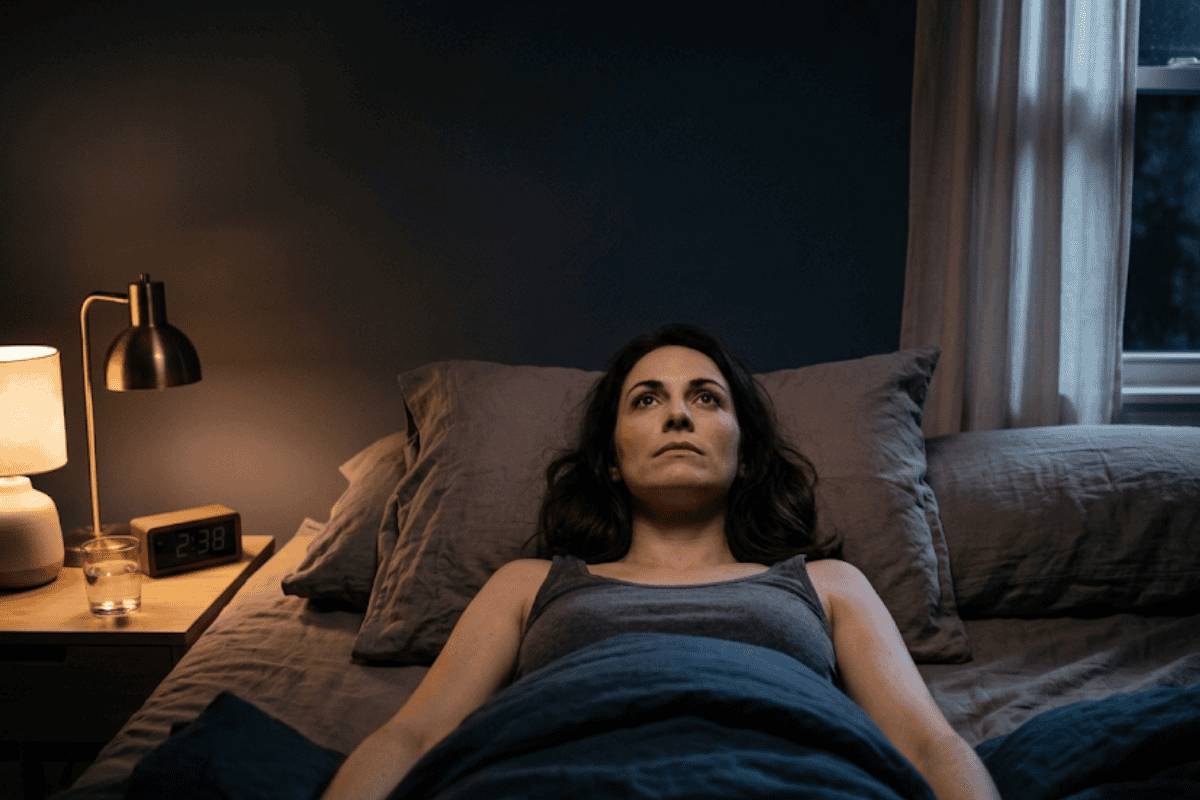
At 1:47 a.m., the bedroom is dark, the phone is face-down on the nightstand, and a Tulsa mom is lying flat on her back with her heart pounding like she just ran up three flights of stairs. Nothing happened. There was no argument, no bad news, no deadline the next morning. She just woke up scared, and now she’s asking the same question a lot of people in Tulsa, OK type into their phones at that exact hour: why do I feel anxious for no reason at night? If this sounds familiar, you’re not broken and you’re not imagining it. There’s a real, physical explanation for why anxiety shows up after dark, and there are things you can do about it starting tonight.
What’s Actually Happening in Your Body at Night
During the day, you have a hundred small distractions competing for your attention: traffic, coworkers, errands, a group text. At night, those distractions disappear, and your nervous system finally has room to process everything it pushed aside. That quiet isn’t calming for everyone. For a lot of people it’s the opposite: the silence makes a racing heart, a tight chest, or a spiral of “what if” thoughts feel louder and harder to ignore.
There’s also a biological piece. Cortisol, the hormone that helps you manage stress, naturally drops in the evening as part of your body’s sleep-wake cycle. Lower cortisol is supposed to help you wind down, but in someone whose stress response is already primed, that shift can instead leave the nervous system unsteady right as you’re trying to fall asleep. Research on sleep and anxiety backs this up: a study of university students found that anxiety-related factors at bedtime, including physical restlessness, a heightened awareness of body sensations, and an unsettled mental state, were significant predictors of delayed sleep onset. In plain terms, an anxious body has a harder time letting go, even when the mind can’t point to a specific cause.
Common Triggers Behind “Anxious for No Reason” Nights
Nighttime anxiety rarely comes from nowhere, even when it feels that way. A few patterns show up again and again:
- Unprocessed stress from earlier in the day. Work pressure, a hard conversation, or financial worry that got pushed aside during business hours often surfaces once the distractions stop.
- Rumination and cognitive distortions. Lying still gives the mind space to spiral into worst-case scenarios, catastrophizing, or all-or-nothing thinking, patterns often described as cognitive distortions that feel true in the moment but distort the actual risk.
- Caffeine, alcohol, or screen use close to bedtime. All three can disrupt the nervous system’s ability to downshift, even hours after use.
- Irregular sleep schedules. Going to bed at wildly different times each night confuses your body’s internal clock and can heighten physical arousal at bedtime.
- An undiagnosed anxiety disorder. For some people, nighttime symptoms are one piece of a broader pattern of generalized anxiety that also shows up during the day.
According to the Sleep Foundation, anxious individuals also tend to spend less time in the deep and REM sleep stages that the brain and body need for real restoration, which can make the next night’s anxiety even more likely.
Occasional Worry vs. a Pattern: When It’s Something More
Everyone has a rough night now and then. The difference between a one-off and something worth addressing usually comes down to frequency, physical intensity, how quickly you can fall back asleep, and how the next day feels. Occasional nighttime worry tends to show up a few nights a month, usually tied to something specific, brings only mild tension, lets you fall back asleep within twenty to thirty minutes, and clears up within a day or two. A repeating pattern looks different: three or more nights a week, a racing heart or tight chest with no clear trigger, an hour or more of lying awake, and fatigue or irritability that follows you into work the next day.
| Criteria | Occasional Nighttime Worry | A Pattern of Nighttime Anxiety |
|---|---|---|
| Frequency | A few nights per month, usually tied to a specific stressor | Three or more nights a week, even without a clear cause |
| Physical symptoms | Mild tension, occasional racing thoughts | Racing heart, tight chest, shallow breathing, sweating |
| Ability to fall back asleep | Within 20 to 30 minutes | An hour or more, or not at all that night |
| Next-day impact | Slightly tired, still functions normally | Fatigue, irritability, and trouble concentrating |
| Duration | Clears up within a day or two | Continues for weeks or longer |
If your nights consistently look like the right-hand column, that’s worth talking to someone about rather than waiting it out. The National Institute of Mental Health notes that clinical anxiety is different from everyday worry because it doesn’t resolve on its own and can interfere with daily life, including work, sleep, and relationships. Occasional anxiety before a big decision is expected, but when symptoms persist and intensify over time, it’s a sign to reach out for support rather than push through alone. If any of this sounds like your last few weeks, reaching out to a licensed therapist is a reasonable next step, not an overreaction.
Why Choose Evolution Mental Health Services
Individual therapy at Evolution Mental Health Services is built specifically around identifying the thought patterns that drive anxiety, not generic advice to “relax more.” A therapist works with you to name the specific triggers behind your nighttime symptoms, whether that’s rumination, an old stress response, or a habit of catastrophizing, and builds a plan around what’s actually happening in your case. That kind of targeted therapy tends to help far more than one-size-fits-all sleep tips, because it addresses the pattern instead of just the symptom.
For a lot of people, the hardest part of getting started is timing. Anxiety that spikes at 11 p.m. doesn’t wait for a weekday office visit, which is why Evolution MHS also offers online therapy through a HIPAA-compliant telehealth platform. You can meet with a therapist in the evening, from home, in Tulsa, OK or anywhere in Oklahoma, without taking time off work or sitting in a waiting room. If cost is part of what’s holding you back, reach out and schedule a consultation to talk through options rather than guessing; a member of the team can walk you through what’s available before you commit to anything.
Simple Ways to Calm Anxious Thoughts Tonight
While you’re working on the bigger picture, a few grounding techniques can take the edge off in the moment:
- Box breathing. Inhale for four counts, hold for four, exhale for four, hold for four, and repeat until your heart rate settles.
- Name it out loud. Saying “this is anxiety, not danger” can interrupt the spiral and remind your brain there’s no actual threat present.
- Get out of bed briefly. If you’ve been awake for more than twenty minutes, sit in a dim room for a few minutes rather than lying there fighting it.
- Write down the loop. Jotting down the worry on paper, even in one sentence, takes it out of the constant mental replay.
- Keep a consistent wind-down routine. Going to bed and waking up at the same time, even on weekends, gives your nervous system fewer surprises to react to.
These tools help in the moment, but they don’t replace addressing what’s driving the anxiety in the first place. The Centers for Disease Control and Prevention has noted that insufficient sleep is linked to real, measurable drops in mental and physical health, which is exactly why a pattern of anxious nights deserves more than a workaround.
Conclusion
Waking up anxious at night with no obvious cause is more common, and more explainable, than it feels at 2 a.m. Between a nervous system that’s still processing the day, a natural evening drop in cortisol, and the quiet that lets racing thoughts get loud, there’s usually a real reason behind the feeling, even when your brain insists there isn’t one. The occasional rough night isn’t cause for alarm, but a repeating pattern of racing hearts, long stretches awake, and groggy, irritable mornings is worth addressing with support. Individual therapy that focuses on the actual thought patterns behind your anxiety, paired with an evening-friendly telehealth option, can make getting started far less overwhelming than it sounds tonight.
If anxious nights have become the norm rather than the exception, you don’t have to sort it out alone. Schedule a consultation now!
Frequently Asked Questions
Why do I feel anxious for no reason at night?
Nighttime anxiety usually isn’t actually “no reason,” it’s your nervous system processing stress from earlier in the day once distractions disappear. A natural evening drop in cortisol and increased awareness of body sensations, like a faster heartbeat, can also make anxiety feel more intense after dark than it does during the day.
Why does anxiety get worse at night in general?
Anxiety tends to intensify at night because the mind has fewer distractions to compete with racing or worried thoughts. Physical stillness also makes it easier to notice sensations like a rapid heartbeat or muscle tension, which can make the anxiety feel stronger even if nothing about the underlying stress has changed.
Can anxiety cause a racing heart at night with no clear trigger?
Yes. Anxiety activates the body’s stress response, which can raise heart rate and cause a pounding or racing sensation even without an identifiable trigger in the moment. This is a physical reaction to stress hormones and nervous system activity rather than a sign of a heart problem in most cases, though new or severe symptoms should always be checked by a doctor.
Is it normal to wake up in the middle of the night feeling anxious?
Waking up anxious occasionally is common and not automatically a sign of a disorder. It becomes more concerning when it happens several nights a week, takes a long time to resolve, or consistently affects how you feel and function the next day.
How can I calm nighttime anxiety without medication?
Breathing techniques like box breathing, getting out of bed briefly instead of lying awake, writing down worries before bed, and keeping a consistent sleep schedule can all help calm the nervous system in the moment. For anxiety that keeps recurring, working with a therapist to address the underlying thought patterns tends to produce more lasting results than nightly coping strategies alone.